




Insights
A Better Brief for Your Brand Design Project
Help a designer understand your audience, goals and the places your identity needs to work.
Retenvo Team ·

A good brief opens a useful conversation
A designer needs more than a preferred colour and a list of logos you like. They need to understand your organisation, the people you serve and what the identity must do in the real world.
A clear brief does not need to prescribe the solution. It gives the design team enough context to explore ideas that fit.
Share the practical details
Describe your services, audience, competitors and the impression you want people to have. Explain where the identity will appear: a storefront, product packaging, social media, proposals or an application. Share existing assets and explain which elements, if any, must remain.
Identify the people who will make decisions, your timeline and the files your team needs. If you have examples you like or dislike, explain what you respond to rather than asking for a copy.
Plan for a usable handover
Ask how the identity will be documented and applied by your team. Test concepts at different sizes and check readability in the places customers will see them. Retenvo helps businesses develop brand identities, guidelines and design assets for everyday use.
Putting the ideas into practice
A new business wants a visual identity but has only collected a folder of logos it likes. The following example shows how the team could turn the advice into a practical plan. The details will differ for each organisation, but the sequence gives everyone a shared starting point.
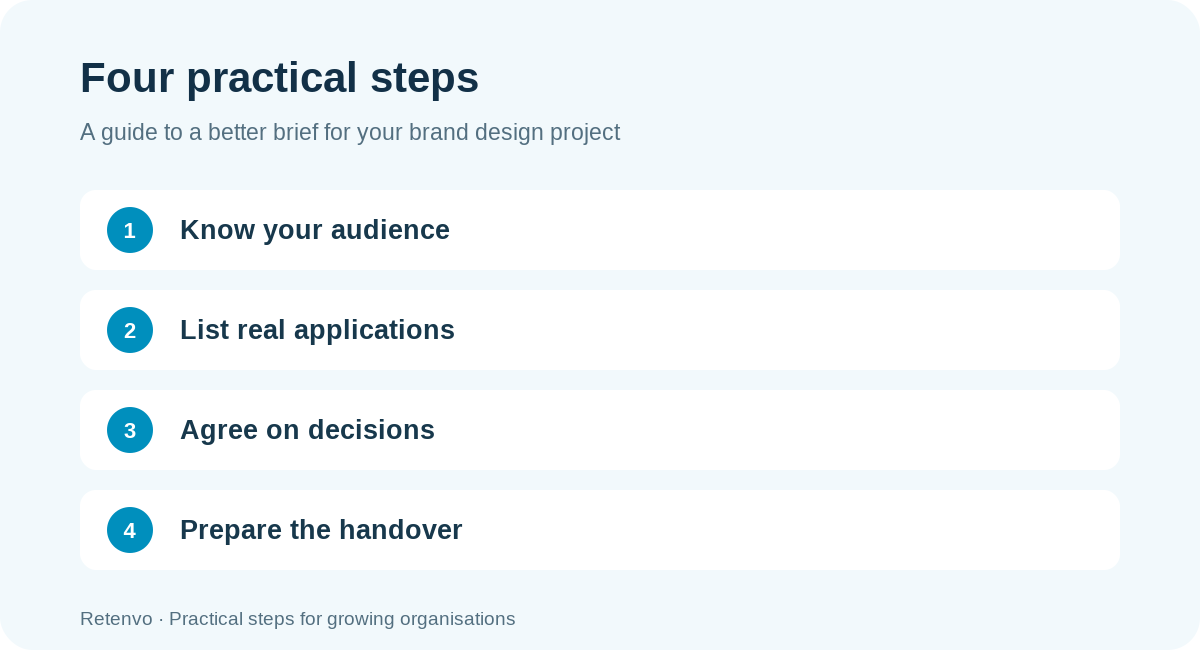
A usable identity needs more than a final logo file. Agree on the formats, templates and examples your team will need, then check the identity in the places customers actually encounter it.
- Define the audience. Describe the business, audience, competitors and the impression its communications should convey.
- Create the identity. List where the identity will appear and which existing elements must be retained, if any.
- Apply it consistently. Identify decision-makers, the project timeline and the formats the team needs at handover.
- Review and update. Explain what you like about reference examples without asking the designer to copy another brand.
How to put an identity to work
Make assets easy to find: Store approved logo files, colours and templates where the people creating materials can access them. Name the files clearly and explain which versions are suitable for print, dark backgrounds and smaller digital spaces.
Test real applications: Review the identity on the materials the business actually uses, whether those are a shop sign, an invoice, product packaging or a social profile. Check readability, image quality and whether the business name and contact details are consistent.
Maintain the system: Give someone responsibility for answering brand questions and updating shared files. When a name or contact detail changes, list the customer touchpoints that need to be updated, including older templates and printed materials.
Explore our services or contact the Retenvo team to discuss your needs.