




Insights
Better Project Briefs Lead to Better Software Conversations
A practical project brief helps teams discuss scope, priorities and real user needs.
Retenvo Team ·

Start with the problem, not a feature list
A project brief does not need to be a long technical document. It needs to help everyone understand what is happening today, who is affected and what should improve. A clear description gives a development team a better starting point than a list of features without context.
Describe the workflow in ordinary language. Explain where people currently spend time, which mistakes are costly and what a successful outcome would look like.
Bring the details that shape the work
Identify the people who will use the system and what each needs to do. Share examples of forms, reports and existing tools where appropriate. List integrations, approval steps and data that may need to move from an older system.
Separate essential launch requirements from ideas that can wait. Include your constraints, such as budget, timing and the availability of staff who can review early versions.
Make room for discovery
A brief is a starting point, not a promise that every answer is already known. Expect the team to ask questions, test assumptions and refine the plan together. Retenvo uses discovery and practical milestones to turn business requirements into a buildable scope.
Putting the ideas into practice
A business wants an application but its teams describe the problem in different ways. The following example shows how the team could turn the advice into a practical plan. The details will differ for each organisation, but the sequence gives everyone a shared starting point.
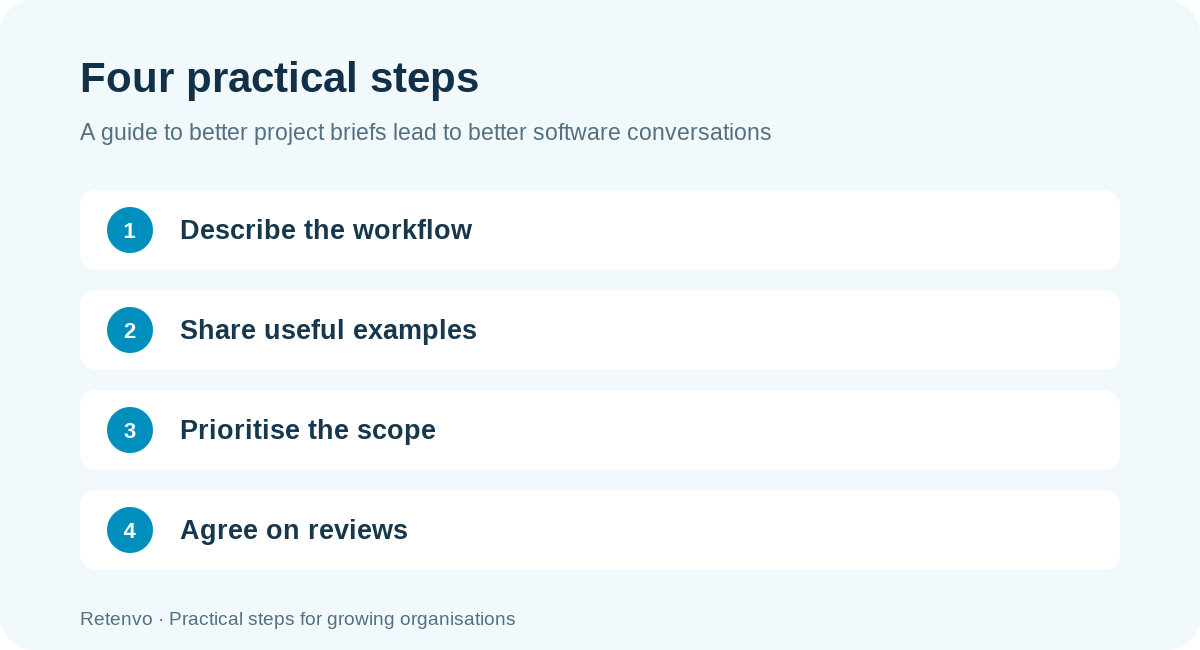
Start with an example of work as it happens today. Note who enters information, where decisions are made and what should happen when a step fails; use those details to evaluate any proposed change.
- Map the workflow. Write a short description of the current workflow, the people involved and the result the business wants.
- Define the scope. Provide examples of existing forms, reports and exceptions without including unnecessary sensitive data.
- Build and test. Separate the first release from later ideas and identify integrations, approvals and migration needs.
- Review in use. Agree who can make decisions and review working versions as the project develops.
Questions to answer before implementation
People and responsibilities: Who enters information, makes decisions and needs to see the result? Include the people who do the work in the discussion and document permissions for each role.
Information and exceptions: Identify existing records, connected systems and the source of each important piece of data. Walk through a normal case and an exception, such as missing information or a failed integration, to understand what the team needs to do next.
Ownership after release: Agree who will support users, maintain the system, manage access and review backups. Define a measurable goal for the first release, then use feedback and operational evidence to decide what to improve.
Explore our services or contact the Retenvo team to discuss your needs.