





Insights
Connecting Business Tools: A Plain-English Guide to APIs
Understand how integrations can help separate systems exchange information more reliably.
Retenvo Team ·

Why connected systems matter
A business might use one tool to receive orders, another to manage inventory and a third to record payments. If staff must copy every detail between them, the same information is entered repeatedly and mistakes can be difficult to trace.
An application programming interface, or API, is one way software systems can exchange information according to agreed rules. Think of it as a defined way for one application to request information or send an update to another.
An integration still needs a plan
Decide which system is responsible for each piece of information, when updates should happen and what users should see if a transfer fails. A payment, for example, should not be treated as confirmed simply because a customer reached a confirmation screen; the business needs a reliable process for verifying and recording it.
Consider permissions, security, monitoring and how changes to either system will be managed.
Start with one valuable connection
Map the current manual steps and estimate where errors or delays occur. Test the integration with realistic scenarios, including duplicate requests and temporary failures. Retenvo helps organisations design APIs and connect software around their business processes.
Putting the ideas into practice
A retailer wants confirmed orders to appear in its inventory system without retyping each item. The following example shows how the team could turn the advice into a practical plan. The details will differ for each organisation, but the sequence gives everyone a shared starting point.
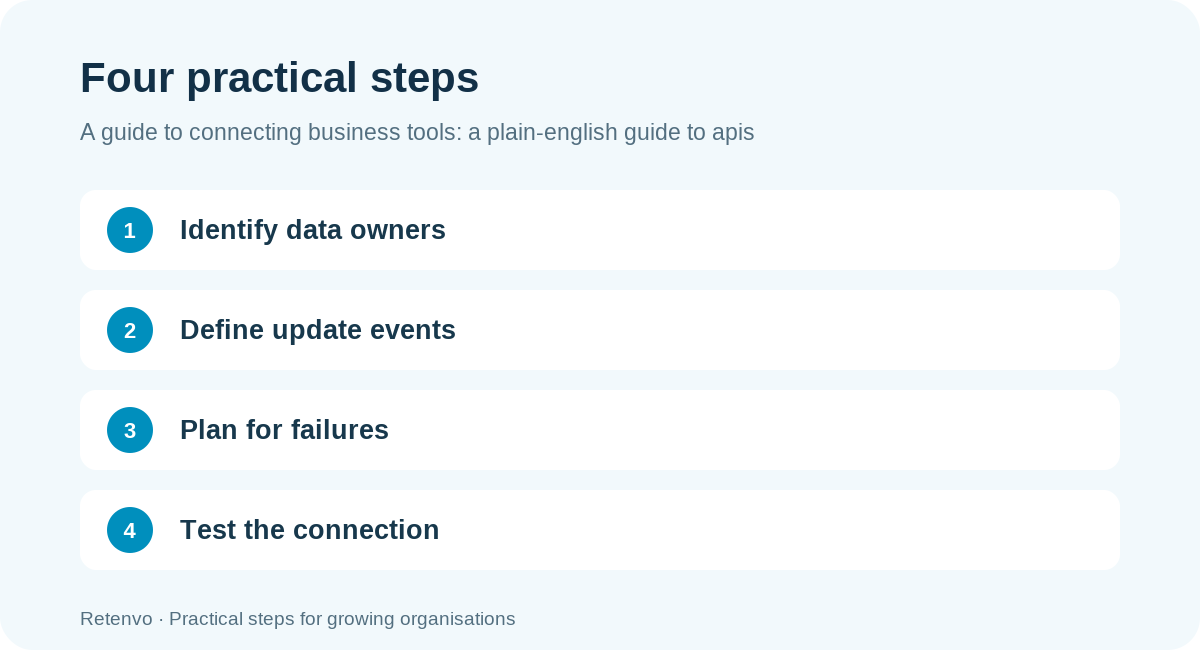
Start with an example of work as it happens today. Note who enters information, where decisions are made and what should happen when a step fails; use those details to evaluate any proposed change.
- Map the workflow. Identify which system owns the order record, stock quantity and payment status.
- Define the scope. Define the events that should trigger an update and how each system verifies a successful transfer.
- Build and test. Plan for duplicate requests, temporary failures, changes to either provider and a way to investigate errors.
- Review in use. Test with ordinary orders and exceptions before relying on the connection for daily operations.
Questions to answer before implementation
People and responsibilities: Who enters information, makes decisions and needs to see the result? Include the people who do the work in the discussion and document permissions for each role.
Information and exceptions: Identify existing records, connected systems and the source of each important piece of data. Walk through a normal case and an exception, such as missing information or a failed integration, to understand what the team needs to do next.
Ownership after release: Agree who will support users, maintain the system, manage access and review backups. Define a measurable goal for the first release, then use feedback and operational evidence to decide what to improve.
Explore our services or contact the Retenvo team to discuss your needs.