





Insights
How to Scope a Useful First Version of Your Product
Focus your first product release on a real user need and a complete core journey.
Retenvo Team ·

A first release needs a purpose
When an idea feels exciting, every feature can seem essential. But a first release has limited time, budget and attention. The goal is to deliver a complete, useful experience for a specific group of people and learn from how they use it.
Describe the problem in one or two sentences, identify the people experiencing it and write down the action they need to complete.
Separate essential from interesting
Map the core journey from beginning to end. Include the less visible work that makes it reliable: account access, administration, support, error handling and the data your team needs to operate. Then set aside features that do not help the first audience complete that journey.
Talk with potential users before treating your assumptions as facts. Ask about what they do today and where the current approach falls short.
Plan how you will learn
Define what you want to observe after release and how feedback will reach the team. Keep room in the plan to fix unexpected issues. Retenvo helps founders and organisations turn early product ideas into scoped software projects and practical milestones.
Putting the ideas into practice
A founder has a long feature list for an application but has not tested the central customer journey. The following example shows how the team could turn the advice into a practical plan. The details will differ for each organisation, but the sequence gives everyone a shared starting point.
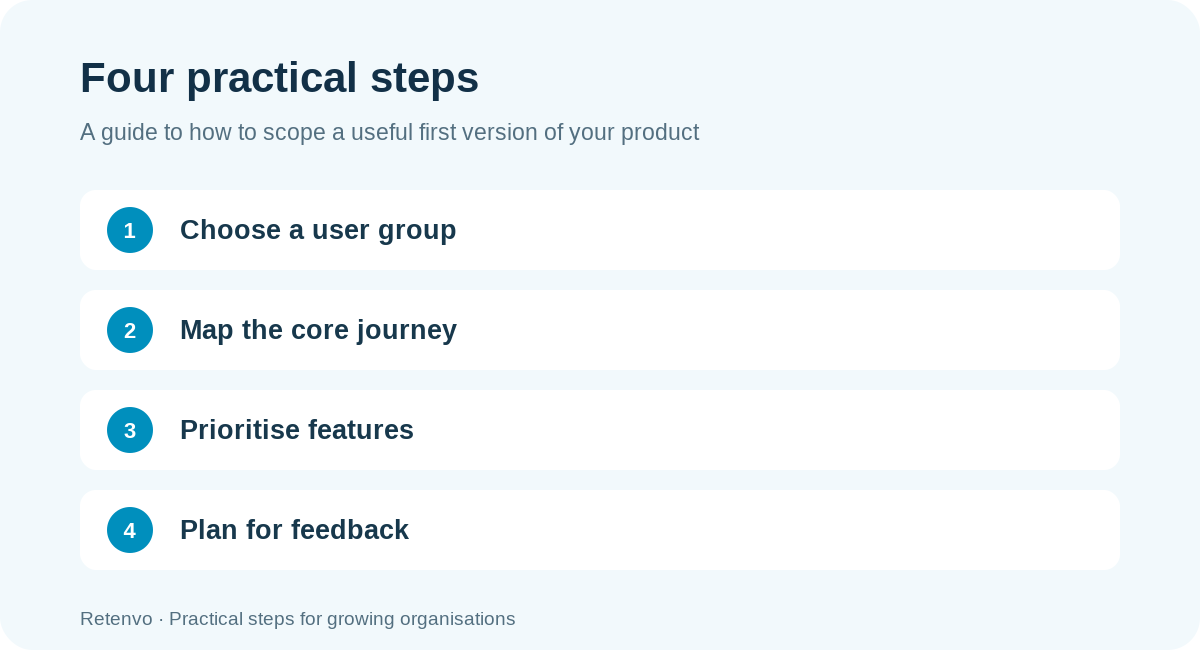
Start with an example of work as it happens today. Note who enters information, where decisions are made and what should happen when a step fails; use those details to evaluate any proposed change.
- Map the workflow. Choose a specific group of users and describe the problem the first version will solve for them.
- Define the scope. Map the core task from start to finish, including sign-in, errors and support where these are necessary.
- Build and test. Separate essential work from later ideas and validate important assumptions with representative users.
- Review in use. Define the feedback and operational information the team needs after launch to decide what to improve.
Questions to answer before implementation
People and responsibilities: Who enters information, makes decisions and needs to see the result? Include the people who do the work in the discussion and document permissions for each role.
Information and exceptions: Identify existing records, connected systems and the source of each important piece of data. Walk through a normal case and an exception, such as missing information or a failed integration, to understand what the team needs to do next.
Ownership after release: Agree who will support users, maintain the system, manage access and review backups. Define a measurable goal for the first release, then use feedback and operational evidence to decide what to improve.
Explore our services or contact the Retenvo team to discuss your needs.