





Insights
Making Remote Work More Organised for Your Team
Build simple routines and choose shared tools that make distributed work easier.
Retenvo Team ·

The office is not the only place work gets stuck
When colleagues work from different locations, ordinary questions can become harder to answer: Where is the latest document? Who owns this request? Has the customer received a reply? The challenge is not simply distance; it is making work visible enough for people to coordinate.
A useful starting point is to map the tasks your team repeats. Identify where information is stored, who needs it and where work waits for a decision.
Choose routines before choosing tools
Agree on one place for shared documents and another clear place to track work if needed. Give tasks an owner and a next step. Set expectations for when to use chat, email or a meeting, and leave room for people whose schedules and connections differ.
Permissions matter when information moves online. Give colleagues access appropriate to their work, remove access when it is no longer needed and use strong account protection.
Improve one workflow at a time
Start with a frustrating process such as customer enquiries or approval of invoices. Try a simpler approach, ask the team what changed and adjust. When existing tools no longer fit, custom software can connect records and steps around the way your organisation works. Retenvo helps teams explore and build those systems.
Putting the ideas into practice
A small team working from different locations struggles to tell which customer requests have been answered. The following example shows how the team could turn the advice into a practical plan. The details will differ for each organisation, but the sequence gives everyone a shared starting point.
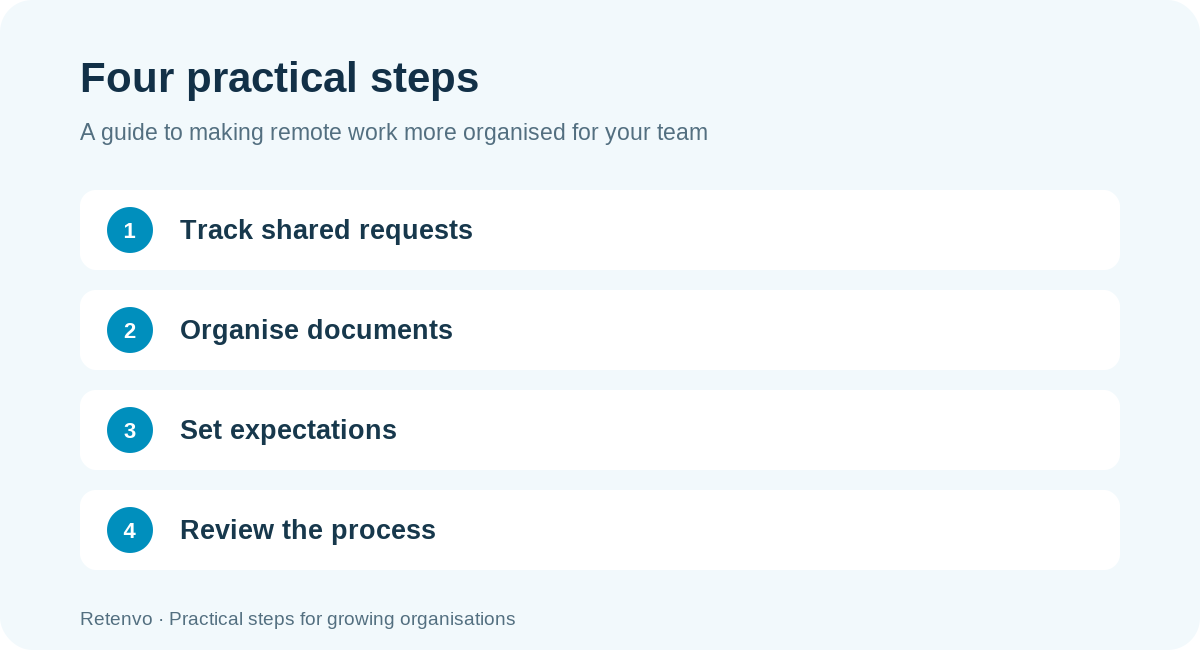
Start with an example of work as it happens today. Note who enters information, where decisions are made and what should happen when a step fails; use those details to evaluate any proposed change.
- Map the workflow. Choose an agreed place to record requests, assign an owner and show the next action for each one.
- Define the scope. Decide which information belongs in shared documents and what should stay in restricted locations.
- Build and test. Set practical expectations for response times and meetings, recognising that connection quality and availability can vary.
- Review in use. Review the process with the team after a few weeks and remove steps that do not help people coordinate.
Questions to answer before implementation
People and responsibilities: Who enters information, makes decisions and needs to see the result? Include the people who do the work in the discussion and document permissions for each role.
Information and exceptions: Identify existing records, connected systems and the source of each important piece of data. Walk through a normal case and an exception, such as missing information or a failed integration, to understand what the team needs to do next.
Ownership after release: Agree who will support users, maintain the system, manage access and review backups. Define a measurable goal for the first release, then use feedback and operational evidence to decide what to improve.
Explore our services or contact the Retenvo team to discuss your needs.