





Insights
What to Know Before Building a Mobile App
Clarify the problem, users and ongoing work before committing to a mobile app.
Retenvo Team ·

An app should solve a problem worth returning to
It is easy to imagine a mobile app full of features. The harder and more useful question is why someone would choose to use it. What task becomes easier on a phone, and how often will the person need to complete it?
Start with a specific audience and one important journey. A field worker recording a visit and a customer booking a service may need very different experiences.
Think beyond the screens
An app may also need accounts, a backend, administration tools, integrations and a way to respond when something fails. Decide whether users need camera access, notifications or offline support, and consider the devices and connections they use.
Plan for testing, store submission and the work after launch. Updating an app, responding to feedback and maintaining connected services are part of the product, not an optional afterthought.
Validate the smallest useful version
Sketch the core journey and discuss it with prospective users before expanding the scope. A mobile-friendly website may sometimes meet the need; in other cases a dedicated app is the better fit. Retenvo helps teams evaluate the options and build around a clear purpose.
Putting the ideas into practice
A service company wants an app so customers can book appointments and receive updates. The following example shows how the team could turn the advice into a practical plan. The details will differ for each organisation, but the sequence gives everyone a shared starting point.
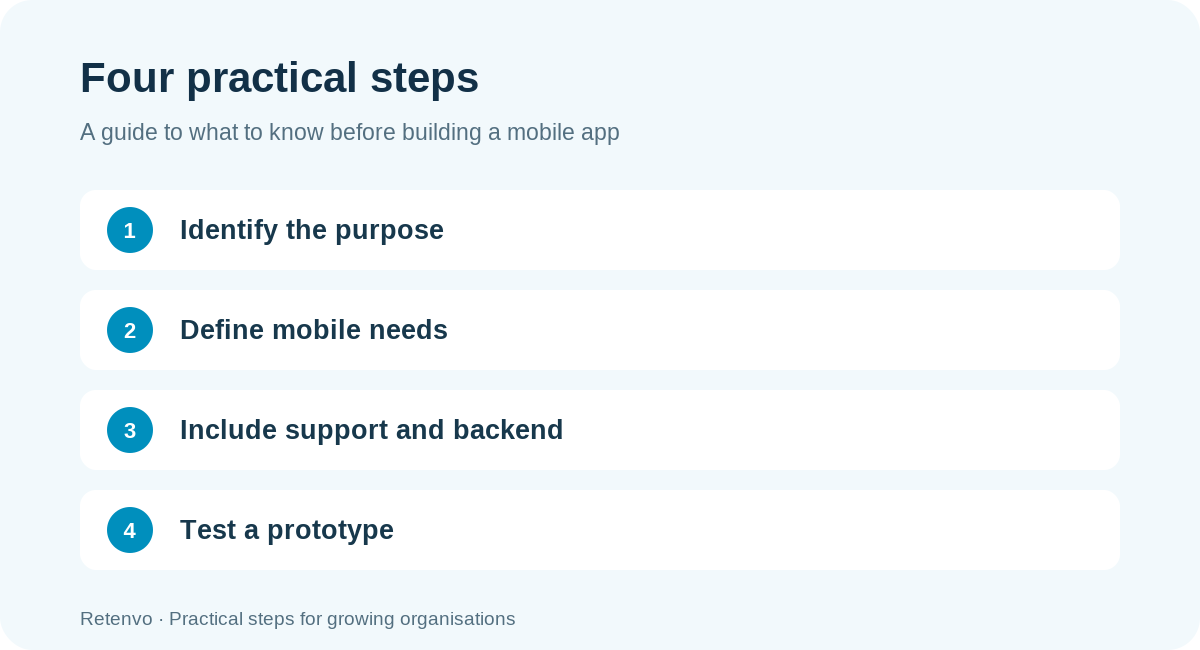
A useful mobile experience accounts for the device, the connection and the situation in which someone is using it. Test the main task with representative users and include support and maintenance in the plan.
- Identify the task. Identify which customer journey needs a phone app and whether a mobile website could meet the same need.
- Design for phones. Describe the devices, account features, notifications, connectivity and any offline requirements.
- Test real scenarios. Include the backend, administration, testing, store submissions and post-launch support in the project scope.
- Support after launch. Test a simple prototype with prospective users before committing to features that do not serve the core journey.
What to include in the project plan
A complete user journey: Map the steps a person takes before, during and after the main task. Include account access, helpful errors and a way to get support, rather than designing only the ideal screen.
Devices and conditions: Test on the kinds of phones your audience uses, including smaller screens and slower connections. Decide whether any task needs offline support and explain what happens when information cannot be sent immediately.
Launch and maintenance: Plan for the systems behind the app, testing, store submissions where applicable and a process for handling crashes and user feedback. Assign someone to own updates after the first release.
Explore our services or contact the Retenvo team to discuss your needs.