





Insights
What to Plan After Your Software Launches
Support, monitoring and feedback help a digital product remain useful after release.
Retenvo Team ·

Launch is a beginning
After months of planning and development, seeing a product go live is an important moment. It is also the point when real users bring new questions, unexpected situations and opportunities to improve.
A useful launch plan therefore includes what happens after the first day, not just the steps needed to release the software.
Give the product a support structure
Decide who receives user feedback, how urgent issues are reported and who can make decisions about changes. Monitor the health of the application and its integrations, and maintain a plan for backups and recovery. Keep access to accounts and services documented and appropriate to each role.
Review errors and support requests alongside what people are trying to accomplish. A recurring question may reveal an unclear screen, not simply a need for another instruction.
Make improvement a regular habit
Prioritise fixes and changes against user needs and business goals. Test updates before release and communicate changes that affect people’s work. Retenvo supports organisations through software development and ongoing maintenance conversations so products can continue to serve their users.
Putting the ideas into practice
A new customer portal is live and the team begins receiving questions and reports of unexpected errors. The following example shows how the team could turn the advice into a practical plan. The details will differ for each organisation, but the sequence gives everyone a shared starting point.
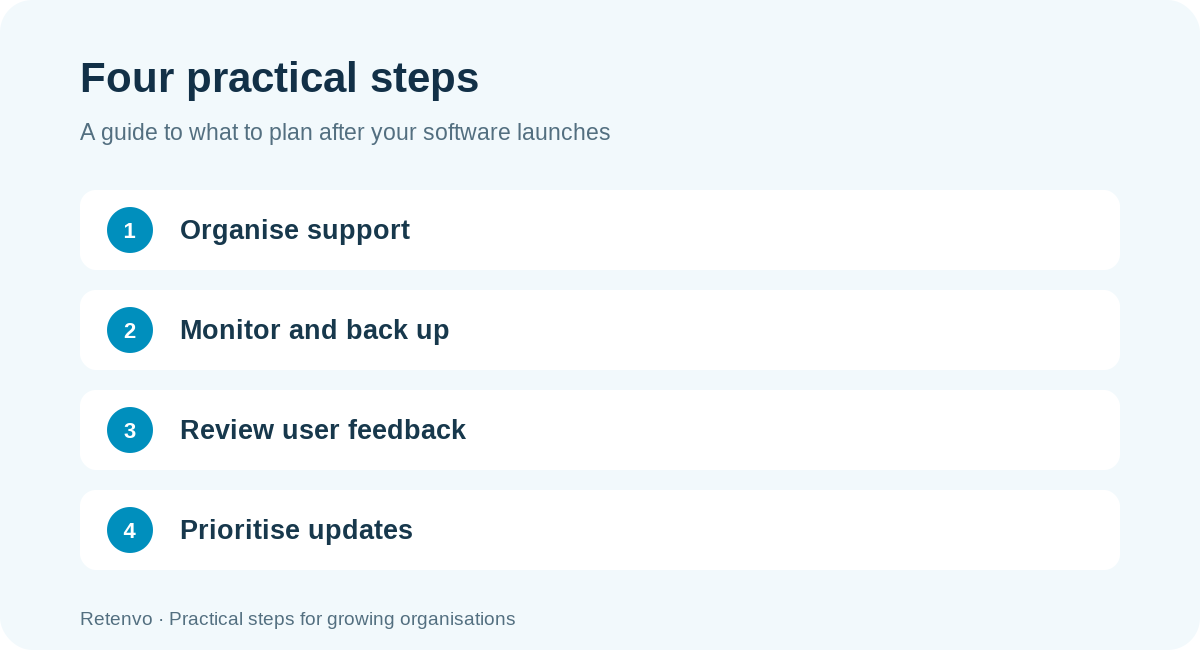
Start with an example of work as it happens today. Note who enters information, where decisions are made and what should happen when a step fails; use those details to evaluate any proposed change.
- Map the workflow. Decide who receives support requests and how urgent problems are escalated.
- Define the scope. Monitor the application and connected services, and document backup and recovery responsibilities.
- Build and test. Review feedback alongside the task users were trying to complete, not just the screen where they struggled.
- Review in use. Prioritise fixes and improvements, test changes and communicate updates that affect users.
Questions to answer before implementation
People and responsibilities: Who enters information, makes decisions and needs to see the result? Include the people who do the work in the discussion and document permissions for each role.
Information and exceptions: Identify existing records, connected systems and the source of each important piece of data. Walk through a normal case and an exception, such as missing information or a failed integration, to understand what the team needs to do next.
Ownership after release: Agree who will support users, maintain the system, manage access and review backups. Define a measurable goal for the first release, then use feedback and operational evidence to decide what to improve.
Explore our services or contact the Retenvo team to discuss your needs.