




Insights
Why Consistent Branding Matters for Small Businesses
Learn how a consistent identity helps customers recognise your business across signs, documents and digital channels.
Retenvo Team ·

A customer sees your shop sign on Monday, receives a quotation on Wednesday and visits your website later in the week. Each interaction gives them a small impression of your business. When the name, colours and message feel connected, it is easier for them to recognise you and remember the experience.
That connection is what consistent branding helps create. It is not reserved for large companies with large advertising budgets. A small business can benefit from a clear, practical identity that its team knows how to use.
A brand is more than a logo
A logo is often the most visible part of an identity, but it is only one piece. Your business name, colours, type, photography and the words you use all contribute to how people experience your organisation. So do the way you answer questions and the care you take with customers.
Think of a neighbourhood bakery. Its sign might catch a customer’s eye, but the packaging, price list and way staff communicate all help shape the impression that follows. If each piece is clear and recognisably connected, customers have a better chance of remembering the business.
Consistency will not fix an unreliable service. It can, however, make a good business easier to recognise and understand.
Start with a few clear decisions
You do not need a large design manual to begin. Agree on the essentials and make sure the people creating your materials can find and use them:
- Your business name: Decide how it should appear and use the same spelling across materials.
- Your logo: Keep suitable versions for print and digital use, including one that works at a small size.
- Your colours and type: Choose a limited set that works together and keeps information readable.
- Your message: Explain what you offer and who you serve in language your customers understand.
- Your contact details: Keep phone numbers, addresses and opening hours accurate wherever they appear.
These decisions give staff and partners a starting point when they prepare an invoice, a sign, a flyer or a web page.
Check how the identity works in practice
A design can look attractive on a large presentation page and still be difficult to use on a receipt or a phone screen. Test your logo at different sizes and check that text remains legible against its background. Review printed materials alongside your website and other digital channels to see whether they feel like the same business.
Provide your team with the right files and simple examples. This makes it easier to use the identity correctly without asking someone to start from scratch each time.
Keep it consistent as your business grows
Your services may change, and your identity can evolve with them. When you update a logo or contact detail, make a list of the places that need attention: signage, stationery, your website, marketing materials and any templates your team uses.
Putting the ideas into practice
A tailoring business uses one logo on its sign but several different names and colours on receipts and social posts. The following example shows how the team could turn the advice into a practical plan. The details will differ for each organisation, but the sequence gives everyone a shared starting point.
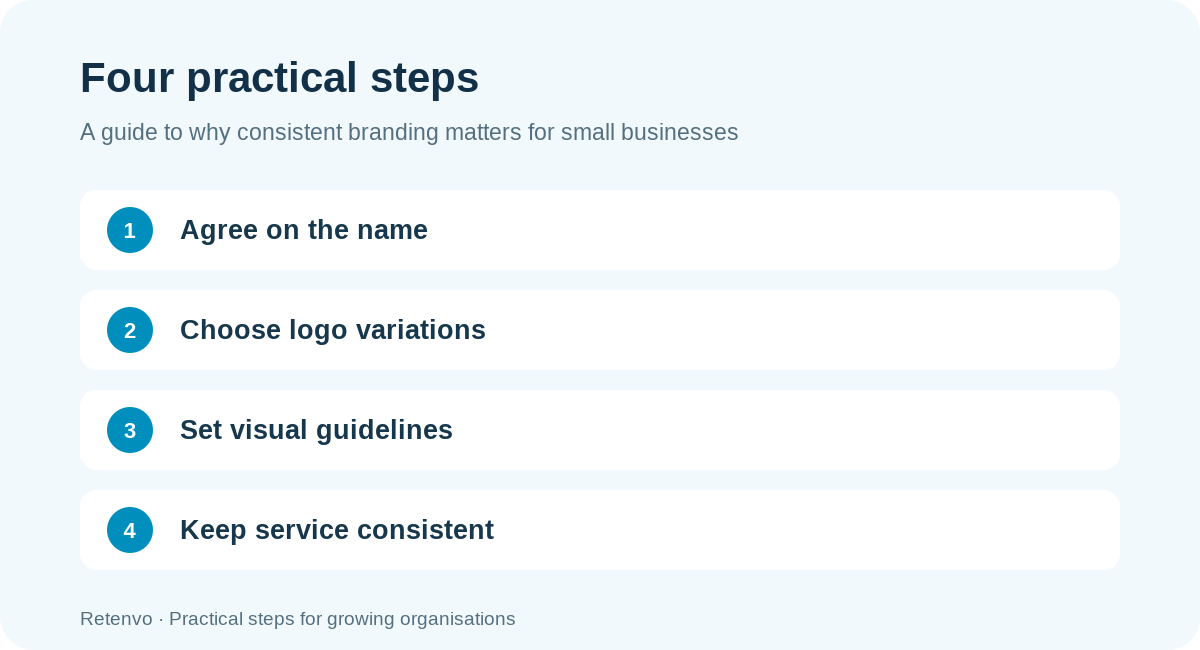
A usable identity needs more than a final logo file. Agree on the formats, templates and examples your team will need, then check the identity in the places customers actually encounter it.
- Define the audience. Choose the business name and contact details that should appear on every customer-facing item.
- Create the identity. Prepare a primary logo and a simpler variation that remains legible on small labels and phone screens.
- Apply it consistently. Document the colours and type choices your team should use, with clear examples for printed and digital materials.
- Review and update. Review the customer experience as well as the visuals: a consistent promise matters only when service supports it.
How to put an identity to work
Make assets easy to find: Store approved logo files, colours and templates where the people creating materials can access them. Name the files clearly and explain which versions are suitable for print, dark backgrounds and smaller digital spaces.
Test real applications: Review the identity on the materials the business actually uses, whether those are a shop sign, an invoice, product packaging or a social profile. Check readability, image quality and whether the business name and contact details are consistent.
Maintain the system: Give someone responsibility for answering brand questions and updating shared files. When a name or contact detail changes, list the customer touchpoints that need to be updated, including older templates and printed materials.
Retenvo helps businesses develop visual identities and the materials needed to apply them. Explore our brand and product design services or contact our team to discuss your project.